Looking Outwards – Erica Lazrus

LookingOutwards — erica_lazrus @ 8:30 pm

Kyle McDonald, People Staring At Computers

Kyle McDonald installed software on computers in Apple stores that took pictures of users staring at the computer screen. McDonald used the photographs to create a blog which “was designed to examine people’s relationship with computers”. I’m not sure it’s so successful in examining this relationship as is, but think it could be if it compared the facial expressions of the user against a screenshot of what the user was actually doing on the computer. The project is extremely controversial because it is now being investigated for computer fraud law, which involves accessing without authorization. Should such a project really be illegal?

Oliver Laric, 2000 Cliparts

Oliver Laric’s project involves a series of 2000 clipart people stitched together to make an animation. The poses of each of the figures relates and is only slightly modified from the figures both before and after it. In this way, the animation shows the relationship, similarities, and differences between people. Furthermore, the usage of clip art figures suggests human relationship to technology and self-representation through such a medium. Whatever is a similarity across the board of all the figures says something about the importance of that element when recreating a human image.

Christian Marclay, The Clock
http://youtu.be/Y8svkK7d7sY”>

Christian Marclay creates a film which also works as a clock. He stitched together clips from different movies, each clip showing a clock displaying the actual current time. This is an interesting project because it inverses the typical relationship between seeing a movie and keeping track of time. Usually going into a theater to watch a film tends to be very time-disorienting, suspending you in a place where time is not at the foreground (think of the times when you go into a theater when there is sunlight and re-emerging when it is dark out). However, “The Clock” reminds you every minute of the existence of time. Does this make the film less enjoyable? Does it make you consider the relationship between real time and the time in the movie? Is such a project a new type of art, different from regular cinema?

alex’s wallpaper

Uncategorized — alex_mallard @ 1:06 pm

background

Outward Ho!

LookingOutwards — adelaide_agyemang @ 11:55 am

The Re’Search (Re’Search Wait’s) by Ryan Trecartin

http://vimeo.com/trecartin/videos/sort:date

http://rhizome.org/editorial/2011/jul/27/making-word-ryan-trecartin-poet/

The Re’Search Wait’s is one piece of Ryan Trecartin’s seven room video installation at MoMA PS1.  The show was my first introduction to Trecartin’s phenomenal work, and  it left a lasting impression.  I loved the small details, the minute and eclectic ways each installation was prepared in order to fully immerse the viewer in the work.  The Re’Search Wait’s is one video (along with another that satirized and deconstructed tween culture which I unfortunately can not remember) that really struck me.  The themes in this 40 min video include consumerism, the artifice of reality t.v. , internet culture and it’s increasing omnipresence in our daily lives, globalism, and other issues relevant to our changing society due to new technology.  All of his videos are mesmerizing,  convoluted masses of imagery and garbled language that contain such accurate reflections and critiques on contemporary life. Check it out!

MySpace Intros on YouTube

http://www.youtube.com/view_play_list?p=EBF5D6DC4589D7B7

This is a collection of MySpace Intros (hahah remember when you had a MySpace?) and I think they are really interesting!  I can’t quite remember this being a trend, but apparently some people would upload videos that were supposed to help strangers on their page get to know them better.  Ironically, however, one of the most fascinating aspects of these videos is the glaring visibility of their virtual personae.  Sometimes when you browse Facebook or any other social networking site of your choosing, you get a very strong sense that whoever these people actually are, it’s the person in the staged photos, videos, and scripted comments  they’ve graciously chosen to share online.  Each of these videos are awkward and sometimes painful to watch, and although the individuals attempt originality, they all blur together into desperate plea after desperate plea for people comment or post or whatever.  I think they poignantly show the difficulty of conveying a factual and unique representation of self on the impassive internet.

The Entire Adobe Museum of Digital Art

http://www.adobemuseum.com/

The Adobe Museum of Digital Art will be the world’s first virtual art museum created with the mission of preserving and presenting incredible new media art.  It is ridiculous. It is crazy. It isn’t even finished yet, and I love it.  When I initially stumbled upon the website I thought, “wow, how awesome, I can’t wait to actually visit once the construction is completed!” And when I saw the featured white spiral building, I mused, “Hmm, this looks cool! But…how…can that be built??” O Adelaide, you simpleton, you fool! Little did she know that she was already IN the museum!  So. I’m excited.  Over the summer the site had a few really neat interactive projects, but I’ve been buzzing around and haven’t been able find them again.  BUT. It’s going to be great.


Paint Sound Sculptures

LookingOutwards — lorena_lopez @ 8:47 am

The creative studio dentsu, teamed up with photographer linden gledhill to create this series of paint sculptures using sound vibrations. the series was part of a campaign for canon’s pixma ink printer brand. the photographs and videos begin by wrapping a membrane around a small speaker. ink drops were placed on this membrane and the speaker was turned on. once it began to vibrate the ink begins to jump up and down. high-speed video cameras and still cameras were used to capture this including circling around the sculptures to see them from all angles. experimenting with different sounds and frequencies created the various pieces.


Skin

LookingOutwards — lorena_lopez @ 8:26 am

Skin


Skin”, an interactive installation made by the collective, Fy. This installation involves the use of Kinect, Arduino and Processing to create an interactive space. It lets the audience plays with a virtual plastic bag and as well as light up the physical ones, creating a unique experience of touching, hence the name, Skin.

Sonisphere

LookingOutwards — lorena_lopez @ 8:21 am

Sonisphere

Based around the metaphor of the conductor and the orchestra, the goal of the piece is to try and recreate the experience of the conductor. Sonic Interaction Design, which uses sound as one of the principle channels of conveying information, meaning and emotional qualities in the context, was employed on this piece. The user must feel in control of the music and how their actions have an affect on both the music and the visualisation. The aim is to take the musical experience of composing to a new level of interaction.

CowsCowsCows

Uncategorized — adelaide_agyemang @ 8:08 am

cowscowscows

Looking Outwards (Alan Herman)

LookingOutwards — alan_herman @ 6:53 am

http://openprocessing.org/visuals/?visualID=34033

I found this link on OpenProcessing and it leads to a very cool interactive project where you click anywhere on the application and the image of a field (in this case a set of connected blue lines) wraps around the place where you clicked and expands the field to where you clicked. What is cool is that you figure out various ways to play with the application by trying for example to get many holes from the image apart as they tend to merge when they are near. It is a fun way to spend some time and I think simple applications like this one can make a boring place a bit more fun.

http://maps.secondlife.com/Second Life

This is probably one of the most interesting virtual worlds created so far. The reason I share this link is because I think of the potential that virtual worlds have to make our encounters with art more interactive and our everyday life more interactive. In Second Life, you can travel to massive virtual places created entirely from peoples’ imagination and even some real life places like cities in Germany and Spain. It would be really cool if we could actually put on some goggles and just walk around the places in second life and truly interact with the objects. Like if someone creates for example a skyscraper, it would be really cool to actually be able to navigate it as if it were a real skyscraper. I just think that the potential of virtual worlds to make our daily lives more interactive is huge.

Second Life

http://www.microsoft.com/surface

Microsoft Surface is a table version of a tablet PC but with lots of other features such as interactions with various objects, connection with other wireless devices, etc. The reason I post it is because it has many features that make it interesting as a constantly changing piece of interactive art. With it you can have multiple people drawing on a screen at the same time which seems like a fun activity for people. People like to get involved in group activities and having huge screens on walls, tables and other places seems like a good idea to get groups together painting or playing music or whatever other way the Surface can be used.


Laurie’s PDF

Project,Uncategorized — laurie_shapiro @ 6:13 am

Well, here we go. project12

It’s actually project 13!

Looking Outward 3 – Eric Mackie

LookingOutwards — eric_mackie @ 6:11 am

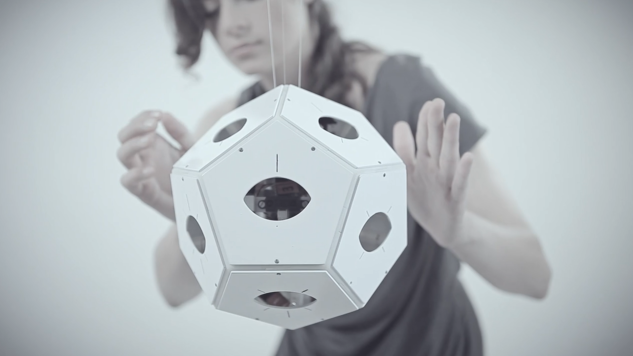
Dodecaudion <-click to view


Despite the admittedly cheesy video and commercial use of dub step, I feel like the “Dodecaudion” shows an interesting combination of multiple technologies (like processing and arduino) to create an interactive, sound-generating device. I’d say this project could fit into the category of sculpture, but I feel like it also has the capacity to be a form of performative instrument. I’m most interested in the beginning parts of this video where the sounds generated by the “Dodecaudion” are harmonic and have a tempo set by the speed of the user’s hands. These features allow for a user to potentially master the object to perform intentional melodies or songs. The description says the project is still in its beginning phases, so I’d like to see where it goes.

« Previous PageNext Page »
This work is licensed under a Creative Commons Attribution-Noncommercial-Share Alike 3.0 Unported License.
(c) 2019 CMU Electronic Media Studio II, Fall 2011, Section A | powered by WordPress with Barecity