Looking Outwards 2

LookingOutwards — jennifer_moreci @ 3:35 am

Rube Goldberg Processor- HFG Karlsruhe

The Rube Goldberg Processor, a collaborative project between teachers and students becomes a highly interesting contradiction of what programming is about.  I was first drawn to this piece because I have always had an interest Rube Goldberg machines and have responded positively to many other similar sorts of endeavors.  This piece was particularly captivating because of the incongruity between programming and a Rube Goldberg machine.  Rube Goldberg machines are designed to complete a task in the most round about way possible, whereas in programming, problems are meant to be resolved with the utmost efficiency.  I was very interested in that relationship, as well as realizing that all the code is still completing its unnecessary task in the most efficient way.
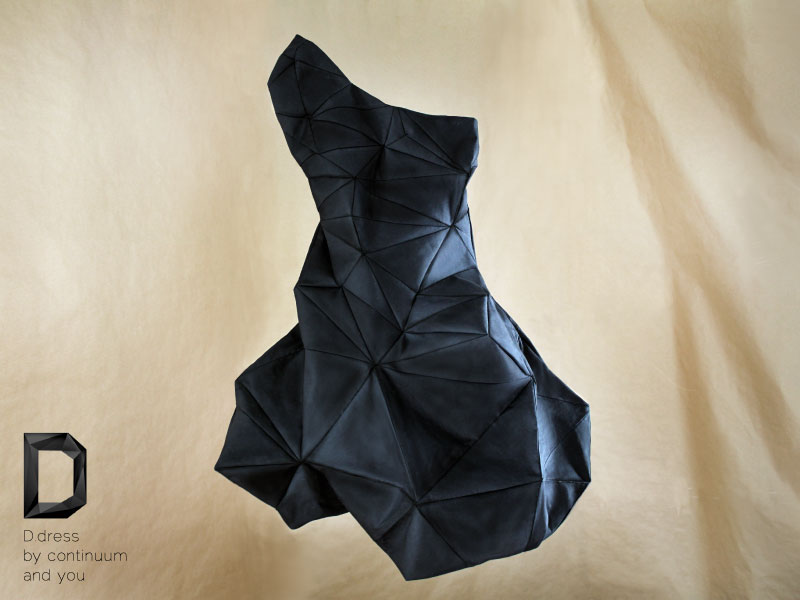
Design by Continum- Mary Huang.

These works stuck out to me because it was an output of computer programming that completely shocked me.  Fashion, very  much like sculpture or painting, has always had the same or similar processes.  The work has always been about the hand, for instance couture fashion is most desirable because it is completely handmade.  The removal of the principal human designer becomes incredibly strange and interesting.  There is a level of customizability, yet the dominant variable in what the dress will look like relies on the program and code written.

http://www.understanding-shakespeare.com/index.html

NOTE: Sorry this is only a URL, the whole website is important to see.

Understanding Shakespeare by Stephan Thiel opens a whole new world for text output.   It is true that the idea of finding the most commonly used words in something, for instance a music (as we’ve seen), is not new.  However, the correlation between a play being an inherently visual output of text, reinvented into two dimensional image is quite thoughtful.  Both are visual outputs, but in an entirely different sense.  Furthermore, trying to understand in a new way, particularly something like Shakespeare- which one could argue has been explored to it’s fullest, is very intriguing.

 

W Hotel London Project_keeling

LookingOutwards — sarah_keeling @ 2:59 am

Mauritius Seeger worked on a project that created software to produce an interactive lighting installation on the facade of the W Hotel in Leicester Square in London. The system takes in information from 8 cameras on the roof, which captures a 360 degree panorama, of the hotel. The cameras take a picture every hour and then the photo’s are analyzed by the software to determine what color is most present. Lights on the face of the hotel then project this data by shining that particular color of light. The colors are affected by the weather, season, time of day, etc… The idea of lighting the outside of a building has been done many times before, especially on our campus. Despite this, I thought this project was worth mentioning, because it is the most tasteful way that I have seen it done. I thought their idea of how to determine the color depending on the activity of the immediate surrounding area made for a great site specific work in a public area. 

W Hotel London

The Tunnel under the Atlantic_keeling

LookingOutwards — sarah_keeling @ 8:12 pm

I found The  Tunnel under the Atlantic to be an interesting new-media piece, because its connected two places and cultures. The piece is by Maurice Benayoun and was completed in 1995. It creates a virtual experience connecting viewers in museums  in Montreal and Paris. The tunnel is a two-meter-diameter tube with an interactive video projection the inside. The imagery consists of layered symbolic and iconic images from the history of the two cultures. While “digging”, viewers can talk to the person on the other side of the tunnel. Pictures and audio are recorded during the audience’s interaction with the piece and then automatically edited in with the stock of historical imagery to create a unique experience every time. It take 6 days of digging for the two sides of the tunnel to meet. Viewers must communicate with the viewers on the other side of the tunnel to coordinate the alignment of the dig in order to meet.  The “televirtual event” is “filmed with four virtual cameras”.  The footage is automatically “mixed and edited” and “take into account each participants speech”. I think that this project has many applications in today’s society and should be installed in a variety of other countries, particularly those in turmoil.

The Tunnel under the Atlantic

# 2 Looking Outwards

LookingOutwards,Uncategorized — adelaide_agyemang @ 8:09 pm

Nemo Observatorium by Lawrence Malstaf

In this 2002 piece, Lawrence Malstaf creates a large cylindrical structure that functions as a typhoon simulator.  The viewer sits in the “eye of the storm” as thousands of tiny styrofoam balls swirl chaotically around them.  The Nemo observatorium is a great example of sensory installation and allows its viewers to experience a phenomenon that could obviously only be experienced with great peril in reality.  One really interesting aspect of the work is the materiality, and the way that Malstaf takes a very specific natural event and so successfully replicates it with completely inorganic items.  Styrofoam balls and reinforced glass hardly come with connotations of nature, but I think sitting in the chamber would make contemplation of nature’s incredible force and power difficult to avoid.  This work was shown in the Woodstreet Galleries downtown-I would have loved to seen and entered the installation!

E-Static Shadows by Dr. Zane Berzina and Jackson Tan

This experimental installation visually communicates the interplay of static electricity in our daily movements and actions.    In this video, viewers interact with the prototype of the final project, which is still in the making.  The installation  analyzes the emission of electrostatic energy in people, light, and sound then light bulbs are lit in “dynamic audio-visual patterns” according to this information.  The project is both an elegant representation of static energy and an opportunity for the creators to conduct research that will “contribute to the knowledge and understanding in the fields of electrostatic, smart textiles, soft technologies and interactive environments in particular as well as interactive art and design in genera l.”  The results of the research generated by the project will  hopefully be utilized in the development of new static electronic technologies that will improve our quality of life in a renewable and sustainable manner.  This project excites me because of its refreshing approach to to research-I think it makes the science of electrostatic energy more accessible and engaging for people such as myself who are unfamiliar with it.

sources: http://www.zaneberzina.com/e-staticshadows.htm and the above vimeo link

The Artist Is Present Game by Pippin Barr

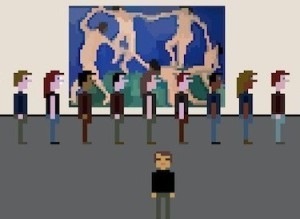
Continuing on the unintentional post theme of virtual/visual representations of reality is a game by Pippin Barr that humerously and thoughtfully simulates the experience of  an averge museum patron’s attempt to see Marina Abromovic at MoMA during her wildly successful retrospective.  The game has all of these quirky, nice touches such as incredibly long (and realistic) wait times, an inablity to play the game when the MoMA is actually closed, and getting pushed out of the line if you leave your browser unattended for too long.  The game also prompted renewed discussion on whether video games can be considered an artistic medium.   I think its funny how people insist on ridgly defining what art can be and only bestowing the term on works that fit their often narrow  rules (it’s art because it’s created on a traditional medium, it can’t be art because it isn’t conceptual, artists must physically create the work etc, etc).  At the same time, I understand the desire to separate art from from popular culture (an attempt to keep art critical? a need to re-establish the arts as venerable and lofty? ) and the human impulse to categorize, but I think that action risks limiting art’s reach and ends up making the art world seem either elitist and sensational or mired in tradition and unwilling to change.   Marina Abromovic’s work was scoffed at and scorned by art critics and the general public as “non-art” for a very long time until people abandoned their old perceptions of what is and isn’t art.  Basically, I think that art doesn’t have to be exclusive for it to be important.

Here is a link to play the game:

http://www.pippinbarr.com/games/theartistispresent/TheArtistIsPresent.html

and here is an interview with the creator:

http://hyperallergic.com/35808/pippin-barr-interview/

Enjoy!

Remote Furniture_Keeling

LookingOutwards — sarah_keeling @ 7:39 pm

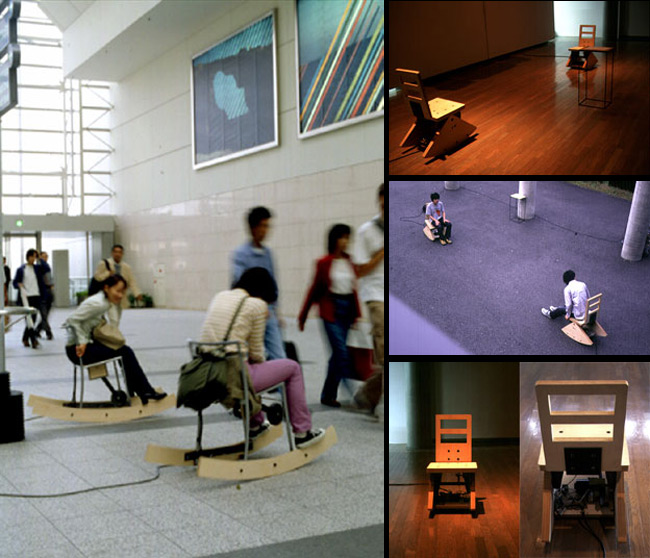
In 1999 Noriyuki Fujimura created “Remote Furniture” with the support of the STUDIO for Creative Inquiry. The piece is a public art installation of two rocking chairs that sit next to or across from each other (depending on the particular installation). The chairs remain still until the audience interacts with them. When a person sits in each chair they begin to rock back and forth. The rocking motion from one chair is sent to the other and which replicates it, creating a shared experience. The chairs are equipped with a sensor and motor to enable them to do this. The pictures of the installed chairs, I find, show a comical space of what almost appears to be dueling rocking chairs. I found this piece interesting because it uses a computer to control a physical object that people interact and I enjoyed the humorous situations it could cause if people we unaware of exactly how the chairs worked.  I think the use of chairs works great for a public piece since they are inviting and encourage interaction.

http://studioforcreativeinquiry.org/projects/remote-furniture

Looking Outwards 2-Erica Lazrus

LookingOutwards — erica_lazrus @ 5:27 am

Maria Lorena Lehman, “Sensing Architecture” and “Ubiquitous Computing”

Lehman suggests the use of ubiquitous computing to create a smart architectural environment that responds to the user’s needs. She furthers explains that such a system “revolve around goal-orientated device cooperation, meaning that the user would need to actively give input to his environment for it to function smoothly. In this sense, the smart environment and the user together create the program for the environment, which begs the question, where is the role of the architect? The architect’s job is to blend the necessary program and a concept in a way that creates a meaningful experience for the user. If the architect no longer is responsible for program (as a programmer would be responsible to initializing the smart environment, and the user and the environment itself for maintaining it), would his role default to entirely be focused on concept? Or will it be expected of the architect to learn how to do such programming himself and bridge more disciplines?

dpr-barcelona, “Architecture in Your Hands”

“Architecture in Your Hands” is a new app that will change the way we store and interact with stored information about the world around us. It’s purpose is to create a “networked learning” focused on “enhancing immediacy, brevity, and simplicity”. A user will be able to learn through stored information while being on site, thereby creating more integrated and engaging learning environment that can be based on a combination of personal experience and critical knowledge. I think it is an important revolutionary way to get a more hands-on learning experience.

The Product, Digital Rube Goldberg Processor

I found this to be a really interesting modern Rube Goldberg machine, centering around our daily use of technology. It shows the inter-connectivity our physical beings in a virtual environment, where we are abstracted in a sense. The dynamic between physicality and virtual reality is understood through the tension between objective output and subjective understanding/interpretation of that output.

Looking Outwards 2_Claire

LookingOutwards — claire_gustavson @ 7:37 pm

The  Sheep Market, Aaron Koblin

In this 2006 work, Aaron Koblin explores the communal potential of the internet. For 40 days, he collected drawings of sheep by random internet users; “the sheep market is a collection of 10,o00 sheep created by workers on Amazon’s Mechanical Turk. Each worker was paid $.02 *US) to ‘draw a sheep facing left.'”(thesheepmarket.com) While this piece doesn’t take itself too seriously, -they are just sheep, after all- the variety and mass of sheep is quite interesting. The variation and uniformity of people’s interpretation of a simple instruction highlights the way that we collectively understand ‘sheep’ while reasserting a sort of subtly individuality.

Average time4 spent drawing each sheep:105 seconds

Average Wage: $0.69/hr

Rejected Sheep: 662

Collection Rate: 11 sheep/hr

Unique IP addresses: 7599


Universe, Jonathan Harris

In this piece, Jonathan Harris has created a program which creates the ‘universe’ of any input. Through this work he questions “If we were to make new constellations today, what would they be? If we were to paint new pictures in the sky, what would they depict? These questions form the inspiration for Universe, which explores the notions of modern mythology and contemporary constellations. It is easy to think that the world today is devoid of mythology… In many ways, what we have today are personal mythologies, practiced by a world of individuals.” (universe.daylife.com/statement) What interests me most is the personal specificity of the project; you define your own universe. Universe allows for the creation of these personal mythologies, defining new constellations and locating and organizing the information that contributes to that universe. “Whereas news is often presented as a series of unrelated static events, Universe strives to show the broader narrative that contains those events.”(universe.daylife.com/statement)


Midimals, Georg Reil


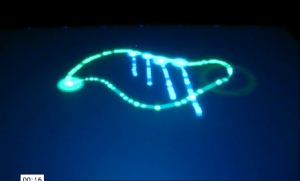
Through Processing, Georg Reil created a water basin which is used as a multitouch table for music application. A fairly simple interface, the user touches the top of the water and corresponding lights and noise is played. Pulsing lights follow the trajectories of the lines that the user has traced. The duration of the sound is controlled by touch as well, the movement of the lights indicates something about the corresponding noise. Primarily, this is an aesthetic exploration; I find the elegance of the form to be very compelling. However, I am interested in the tactility. Does it function beyond the simple tapping on the surface of the water? What happens if the hand is plunged below the meniscus? Could a program be written which correlates sound to that movement as well?


Looking Outwards 2 – Keith Lafuente

LookingOutwards — keith_lafuente @ 4:14 am

Teleklettergarten – Bitnik and FOK

This performance took place on a humongous keyboard installed on the side of the art university in Linz, Austria. The keyboard doubled as a climbing wall, and climbers doubled as computer programmers. Over the course of a week, climbers collaboratively “typed” codes and scripts. I think the contradiction of doing something so fundamentally digital in such a physically challenging and analog way makes for a very interesting perspective on computer programming, transforming the very action of programming into a definitive art piece. However, I think the artists’ main message, which was a statement against patents for basic software, was somewhat lost and personally less interesting than the rest of the piece.


Jeff Koons Must Die!!! – Huner Jonakin

“Jeff Koons Must Die!!!” is an arcade-style video game set in a Jeff Koons exhibition. Armed with a missile launcher, the player (you) has the choice to either enjoy or obliterate Koons’ artwork. If you choose the more destructive route, then Jeff Koons himself confronts you and sends guards to kill you. If you survive the guards, then you are plagued by curators, lawyers, and gallerists until you are dead. This game is a humorous commentary on the art market, the museum system, the commercialization of art, and Koons’ undue praise. I particularly like this piece because of its accessibility; it allows someone to take something as sacred and untouchable as an expensive work of art and be able to personally engage with it.


Kiss Transmission Device -Nobuhiro Takahashi

Kiss Transmission Device

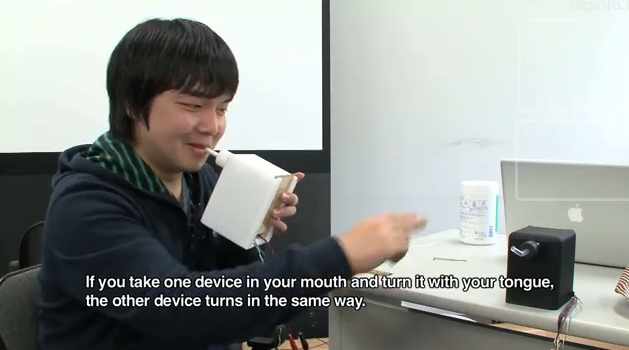
“Send a kiss over the internet with the kiss transmission device” Although not technically an art piece, I still find it to be an incredibly interesting piece of technology. Using a strange gadget connected to a computer, one can supposedly send a kiss by stimulating a bendy-straw-looking-type-thing, whose movement is replicated in another gadget belonging to the person being kissed. This is interesting because it really makes one question how far technology can go and how deeply integrated into human life it can possibly become, even replacing very human acts like kissing. What sort of problems will arise if machines start realistically imitating human behavior?

Another question that comes up is if this particular machine actually feels like kissing, or if it just feels like a straw spinning in your mouth.

Looking Outwards – Erica Lazrus

LookingOutwards — erica_lazrus @ 8:30 pm

Kyle McDonald, People Staring At Computers

Kyle McDonald installed software on computers in Apple stores that took pictures of users staring at the computer screen. McDonald used the photographs to create a blog which “was designed to examine people’s relationship with computers”. I’m not sure it’s so successful in examining this relationship as is, but think it could be if it compared the facial expressions of the user against a screenshot of what the user was actually doing on the computer. The project is extremely controversial because it is now being investigated for computer fraud law, which involves accessing without authorization. Should such a project really be illegal?

Oliver Laric, 2000 Cliparts

Oliver Laric’s project involves a series of 2000 clipart people stitched together to make an animation. The poses of each of the figures relates and is only slightly modified from the figures both before and after it. In this way, the animation shows the relationship, similarities, and differences between people. Furthermore, the usage of clip art figures suggests human relationship to technology and self-representation through such a medium. Whatever is a similarity across the board of all the figures says something about the importance of that element when recreating a human image.

Christian Marclay, The Clock
http://youtu.be/Y8svkK7d7sY”>

Christian Marclay creates a film which also works as a clock. He stitched together clips from different movies, each clip showing a clock displaying the actual current time. This is an interesting project because it inverses the typical relationship between seeing a movie and keeping track of time. Usually going into a theater to watch a film tends to be very time-disorienting, suspending you in a place where time is not at the foreground (think of the times when you go into a theater when there is sunlight and re-emerging when it is dark out). However, “The Clock” reminds you every minute of the existence of time. Does this make the film less enjoyable? Does it make you consider the relationship between real time and the time in the movie? Is such a project a new type of art, different from regular cinema?

Outward Ho!

LookingOutwards — adelaide_agyemang @ 11:55 am

The Re’Search (Re’Search Wait’s) by Ryan Trecartin

http://vimeo.com/trecartin/videos/sort:date

http://rhizome.org/editorial/2011/jul/27/making-word-ryan-trecartin-poet/

The Re’Search Wait’s is one piece of Ryan Trecartin’s seven room video installation at MoMA PS1.  The show was my first introduction to Trecartin’s phenomenal work, and  it left a lasting impression.  I loved the small details, the minute and eclectic ways each installation was prepared in order to fully immerse the viewer in the work.  The Re’Search Wait’s is one video (along with another that satirized and deconstructed tween culture which I unfortunately can not remember) that really struck me.  The themes in this 40 min video include consumerism, the artifice of reality t.v. , internet culture and it’s increasing omnipresence in our daily lives, globalism, and other issues relevant to our changing society due to new technology.  All of his videos are mesmerizing,  convoluted masses of imagery and garbled language that contain such accurate reflections and critiques on contemporary life. Check it out!

MySpace Intros on YouTube

http://www.youtube.com/view_play_list?p=EBF5D6DC4589D7B7

This is a collection of MySpace Intros (hahah remember when you had a MySpace?) and I think they are really interesting!  I can’t quite remember this being a trend, but apparently some people would upload videos that were supposed to help strangers on their page get to know them better.  Ironically, however, one of the most fascinating aspects of these videos is the glaring visibility of their virtual personae.  Sometimes when you browse Facebook or any other social networking site of your choosing, you get a very strong sense that whoever these people actually are, it’s the person in the staged photos, videos, and scripted comments  they’ve graciously chosen to share online.  Each of these videos are awkward and sometimes painful to watch, and although the individuals attempt originality, they all blur together into desperate plea after desperate plea for people comment or post or whatever.  I think they poignantly show the difficulty of conveying a factual and unique representation of self on the impassive internet.

The Entire Adobe Museum of Digital Art

http://www.adobemuseum.com/

The Adobe Museum of Digital Art will be the world’s first virtual art museum created with the mission of preserving and presenting incredible new media art.  It is ridiculous. It is crazy. It isn’t even finished yet, and I love it.  When I initially stumbled upon the website I thought, “wow, how awesome, I can’t wait to actually visit once the construction is completed!” And when I saw the featured white spiral building, I mused, “Hmm, this looks cool! But…how…can that be built??” O Adelaide, you simpleton, you fool! Little did she know that she was already IN the museum!  So. I’m excited.  Over the summer the site had a few really neat interactive projects, but I’ve been buzzing around and haven’t been able find them again.  BUT. It’s going to be great.


« Previous PageNext Page »
This work is licensed under a Creative Commons Attribution-Noncommercial-Share Alike 3.0 Unported License.
(c) 2019 CMU Electronic Media Studio II, Fall 2011, Section A | powered by WordPress with Barecity